From The Vaults

15 March 2026
The Life and Times of Bob Collis

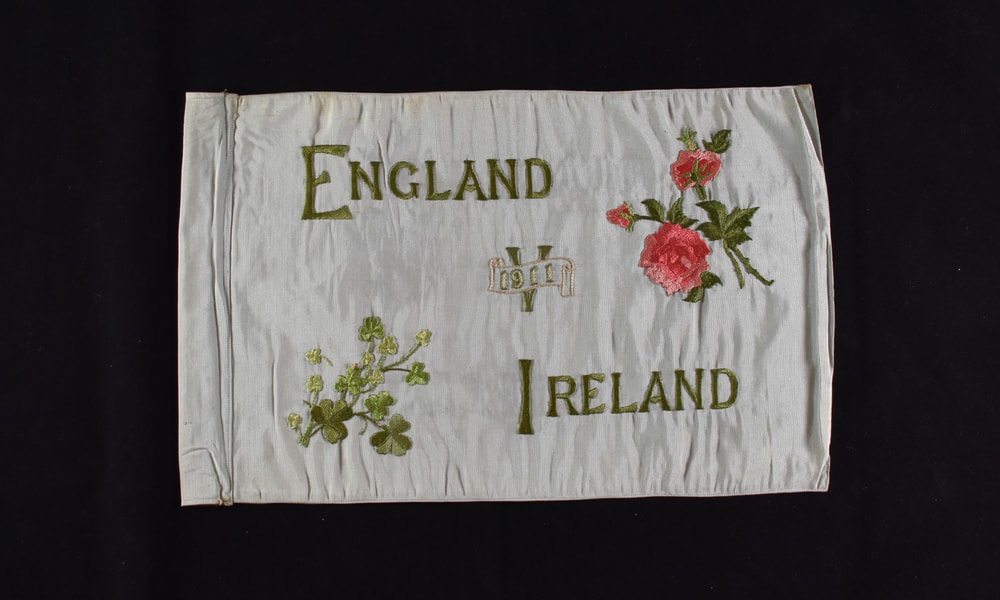
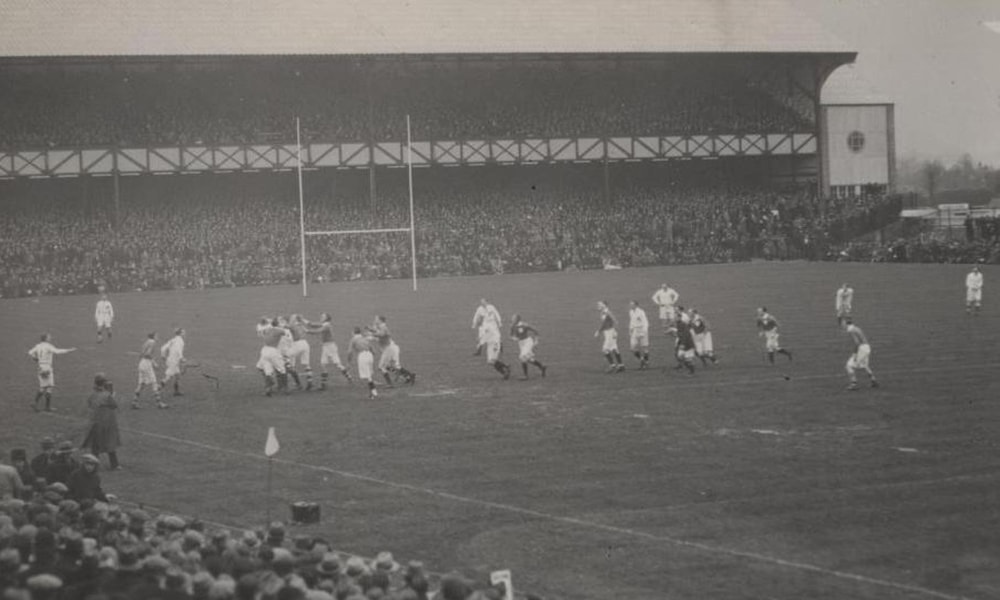
Throughout his education, Robert had combined learning with sport. As an eleven-year-old, he had been fortunate enough to witness Ireland defeat England at Lansdowne Road and wrote a colourful and often amusing account of his terrace experience in his 1936 book, 'The Silver Fleece':

Ireland v England, 1911

"Thirty thousand people forgot who they were, dropped their masks and became a mob, a herd, with but one will Unionists and Nationalists, Ulstermen and Munstermen, Catholics and Protestants, and unathletic intellectuals who had been brought protesting by their families, and became affected alike. All yelled "IRELAND" till their throats only emitted a croak."

Tall and firmly built with considerable tackling ability and stamina, Collis had dabbled at wing three-quarter but was more often to be found amongst the forwards. It quickly became apparent that he had the ability to play the game at the very highest level. By the time he reached university, he had been selected for Harlequins and was sharing a field with celebrated former English international captain Adrian Stoop and future England captain Wavell Wakefield.

He was delighted to earn his blue in his first year at Trinity and helped Cambridge defeat Oxford in a pack that included two more future England captains- JH Greenwood and Ronald Cove-Smith. He earned his second blue the following year.

He had also been selected for Leinster in 1919 and remained involved with the provincial side until 1925, keeping him within the mind's eye of Irish selectors. Having graduated in 1924, he initially took up the role of House Physician at King's College Hospital. He later worked at Johns Hopkins Hospital in Baltimore, USA and Great Ormond Street Hospital in London.

Despite missing two whole seasons after suffering from pleurisy and suspected tuberculosis while at Yale, Collis returned to rugby at the start of the 1922-23 season. At the start of the next season, Collis threw himself into the game playing for Harlequins, King's College Hospital, United Hospitals and Dublin Wanderers. His performances were of such quality that an invitation to the Irish Trials followed. After performing well, a telephone call from Dublin confirmed that he would play for Ireland against France in the first round of the 1924 Five Nations.

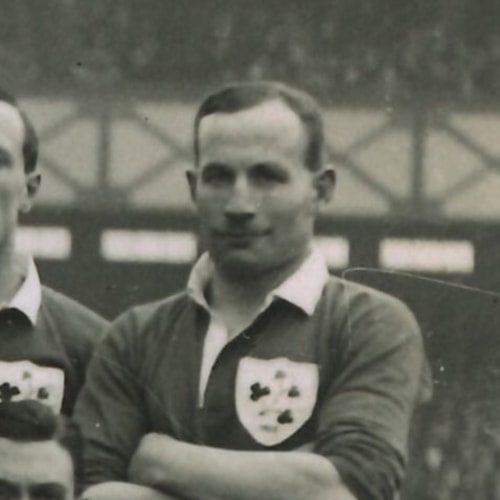
'…"Ireland" they yelled as we came on to the ground at Lansdowne Road, and for a moment we were Ireland to that vast crowd of our fellow-countrymen. I had taken my place with the "men in green jerseys" the heroes of my childhood. It thrilled my imagination beyond the possibility of analysis.'

Ireland won the match but Collis was left out of the next two games, which Ireland lost. He returned to help Ireland to another win, against Wales in Cardiff.

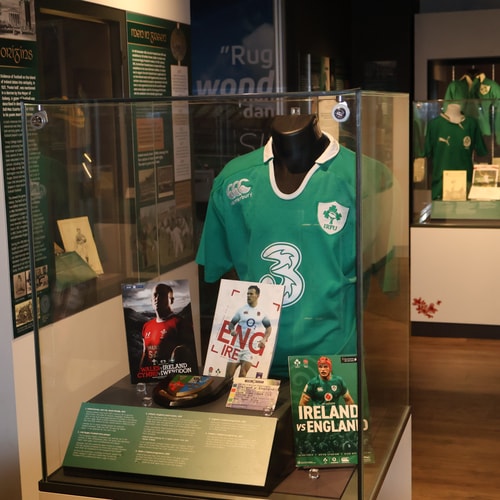
England v Ireland, 1925

Collis described the 1924-25 season as the best of his career. He played in three out of four Tests during the Five Nations, in which Ireland finished second. In his book, he described in great detail the experience of holding England to a 6-6 draw at Twickenham. He was later singled out as being the chief protagonist within an Irish pack that had dominated their opponent for 75 minutes.

'I was content, and from now onwards I played solely for the joy of the game, and my mind began to think of other things and other worlds to conquer.'

Despite his contentment, Collis returned for Ireland the following year, helping Ireland claim a share of the 1926 Five Nations alongside defending champions Scotland. With his international rugby career over, his real career was just beginning to take off. In 1932 he published a groundbreaking paper on rheumatic fever and erythema nodosum, the same affliction that had almost killed him, whilst a student at Yale.

On returning to Dublin, he set up the Irish Paediatric Club (now- Irish Paediatric Association) and became its Honorary Secretary. Outside of medicine, he set up the Citizens' Housing Council, through which he campaigned energetically for a general improvement in the provision of housing for the poor. He published his autobiography, 'The Silver Fleece', in 1936.

Towards the end of the Second World War, Collis volunteered to assist the Red Cross. As a result, he was one of the first people into the liberated Bergen-Belsen Concentration Camp in northern Germany. Having set up a children's hospital within the camp, he became aware of just how many children had become orphaned whilst trying to survive the camp.

He made it his mission to try and find homes for the children and arranged the transfer a several of them to Fairy Hill Hospital in Howth, County Dublin. With that done he adopted two more of the children himself and returned with them to Ireland. He later wrote of these experiences in his 1947 book 'Straight On' with co-author and fellow rescue worker Han Hogerzeil, who later became his second wife.

On his return to Dublin, Collis set up the National Cerebral Palsy Clinic. This brought him into contact with writer and painter Christy Brown. Cerebral palsy meant that Brown could write and paint only with his left foot. In 1954 Collis contributed the introduction to Brown's book 'My Left Foot'. The book quickly became a best-seller and in 1989 was adapted to film, with the actor Daniel Day-Lewis playing Brown.

The restless Collis and wife Hogerzeil moved to Nigeria in 1957 and, over the following ten years, helped set up the Institute of Child Health in both Ibadan and Lagos. In 1973, now well past retirement age, Collis moved to India to work in a leper colony in Dichpalli, near Hyderabad. In addition to trialing new medications for the treatment of children with leprosy, he encouraged them to play cricket and joined in enthusiastically at the age of 73.

He continued to write up until his death in 1975, at the age of 75. He had two sons with first wife Phyllis, two more with Han, as well as raising Holocaust survivor siblings Edit and Zoltan Zinn. Zoltan Zinn-Collis wrote the book 'Final Witness: My Journey from the Holocaust to Ireland' in 2006, recording his childhood rescue from Bergen-Belsen at the hands of his adopted father.