From The Vaults

21 November 2025
Barry Holmes: The Englishman from Argentina

From 2009, Argentina have been regular Autumn International opponents of England. Since then a series of novel trophies have been created to present to the winners. Is it time to inaugurate a permanent trophy for these two fierce competitors? If so, should it be called the Barry Holmes Cup? Read on to learn Barry's incredible story.


Great Britain and Argentina first established diplomatic relations in 1823. From the mid-point of the 19th Century, British investment into Argentina, helped develop critical infrastructure like railways, ports, banking and insurance. British textile exports to the country grew, whilst Argentine beef and grain flowed the other way.

During this period of economic and industrial development, English, Welsh and Scottish families settled in cities such as Buenos Aires. British style schools were established to cater for their families and British sporting activities such as rugby football, cricket and hockey found their way onto the River Plate. Many of the schools and sports clubs set up in this period remain today, and Argentina is a first-class rugby union playing nation.

It was into this situation that William Barry Holmes was born in Buenos Aires in 1928. His father had been a farm manager in England before rising to become a Director of Bovril's Argentina meat operations. William was educated at St George's College in Quilmes. It was there that he joined Old Georgian Club, a local side that enjoyed significant success in the late 1930s. In 1946 William, now better known as Barry, crossed the Atlantic to study Agriculture at Queens' College, Cambridge.

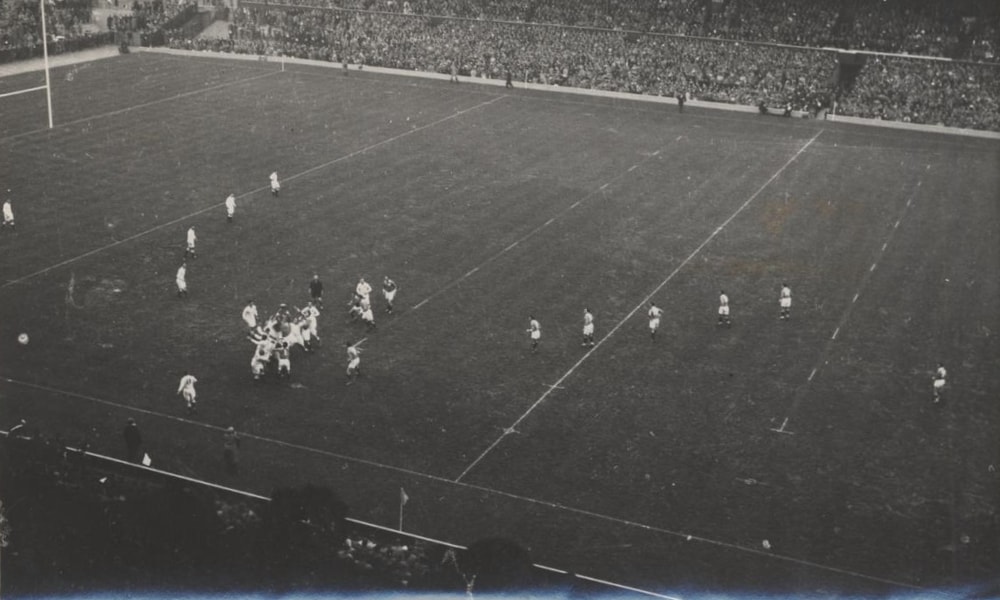
England's next match was in Dublin against reigning champions Ireland. Once again England started brightly and Holmes converted a try by Van Ryneveld to give his side a 5-3 lead. Ireland's Jack Kyle then took command and the men in green won 14-5 on their way to a first ever back-to-back title.

Twickenham Debut

Two weeks later Holmes would make his international debut at Twickenham against France. An early try from Lew Cannell, which Holmes converted gave England a lead which they never relinquished. A dropped goal apiece made the final score 8-3 to England. England carried this form into Holmes' final England Test match as England cut loose against Scotland, scoring five tries in a 19-3 home victory.

With the tournament over, Holmes was selected for the Barbarians Easter tour of South Wales. On his return, he completed his studies before returning to Argentina with his fiancée Maureen, where he intended to complete his national service. First though, he paid a visit to his old club the Old Georgian Club. The talk of the town amongst the Argentina rugby community was the visit of the French national team who were part-way through a 9 match tour that would culminate in two Tests against Argentina in Buenos Aires.

Having lost all of the provincial fixtures, the Argentine selectors were keen to make a better showing in the Test matches. English international Holmes, meanwhile, had played a couple of games for Old Georgian Club and, in a time when national eligibility rules were less clearly defined than they are now, was invited to play.

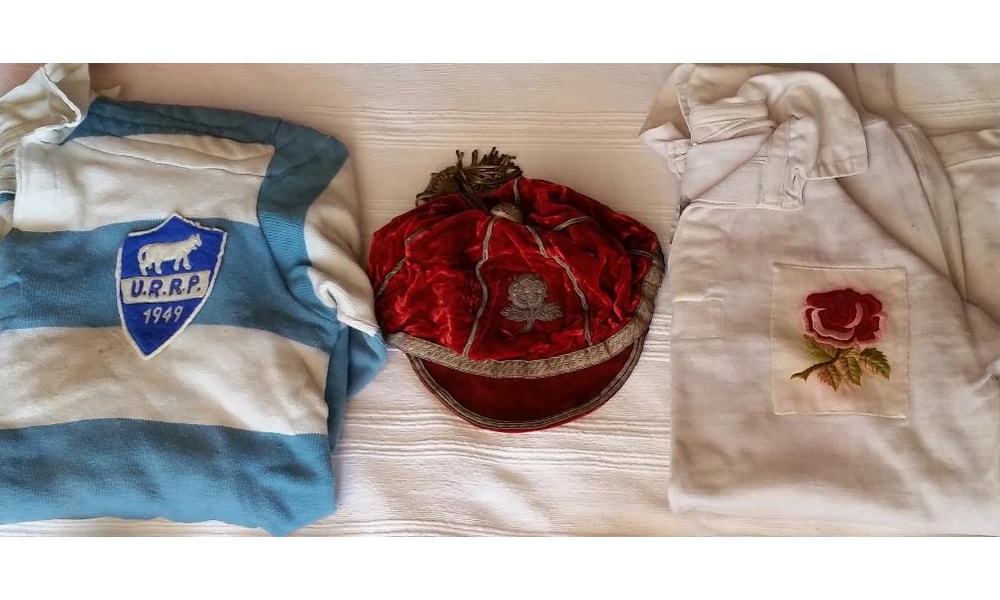
So on 28th August 1949, Barry Holmes made his Test debut for the country of his birth. His appearance didn't go unnoticed though. Several of the French players had played against him at Twickenham earlier in the year and were more than a little surprised to bump into him again on the other side of the Atlantic Ocean. After some puzzled exchanges the match went ahead and in a closely fought contest the highly rated French side prevailed 5-0. A week later Holmes played in his second Test for Argentina and sixth overall. France won the match 12-3. To this day, Holmes is the only man to have played at Test level for both England and Argentina.

To cap off a remarkable year, Barry and Maureen married and moved to the Northwestern Argentinian city of Salta. Tragically just days later Barry succumbed to typhoid fever and died at the age of 21. His heartbroken mother is said to have laid a place at the dining table for her only child every night for the rest of her life. Mercifully, she was gifted a grandchild as Barry and Maureen's son, Tim, was born in 1950.

Legacy

In 2020 Tim contacted the museum an informed us that both Barry's England and Argentina jerseys were in his families' possession. Treasured mementoes of his father's tragically short but uniquely brilliant life.