From The Vaults

12 November 2026
The Minoru Mera Story by Hideki Shoji

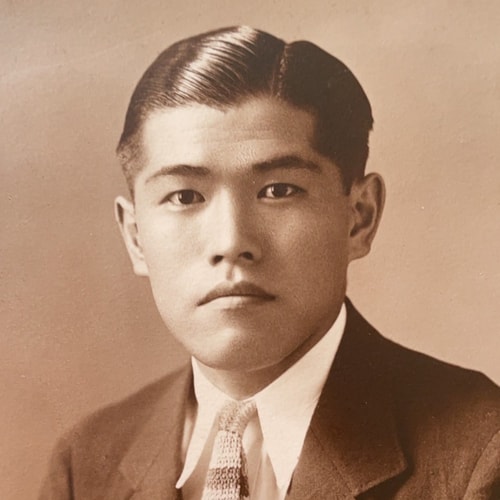
The Minoru Mera Story: How Kyoto Rugby never forgot their fallen teammate

by Hideki Shoji


At 4 pm on 12 November, 1933 in Kobe, Japan, 15 minutes into the second half of a match between Kobe Rugby Club (KRC) and Kwansei Gakuin University (KGU) at Kobe East Park, a player half-consciously staggered two or three steps after a 'loose scrum,' putting his hand to the left side of his head, kneeled on one knee and slumped down on the pitch. The moment the referee saw the player lying limply on the ground, he blew the whistle.

The match was scoreless at halftime and the second half kicked off at around 3:45 p.m. KGU scored from a 'goal' early on, KRC then went on the offensive advancing into the left side of the KGU territory near the 25-yard. But a pass from a three-quarter was intercepted, pushing the team back to their own 25-yard line. The fierce, chaotic battle continued and at around 4 p.m., a 'loose scrum' was formed 10 yards from the KGU goal line. The ball was fed to an opponent's standoff, which the referee judged to be a forward pass Just as the 'tight scrum' was about to form, Mera was found lying motionless and quietly groaning on the field.

"Call an ambulance!" someone shouted. They tried to give first aid, cooling his head and chest with wet towels. To restore Mera's consciousness, one of the teammates, propped him up from behind and poured a sip of brandy into his mouth, only to find that he made no spontaneous attempt to drink, and the liquid spilled from the corner of his mouth. Growing impatient, and considering it an emergency where every minute counted, they decided to drive him to the hospital themselves. During transport, one of the attendants laid Mera on the back seat of the car and, holding his head to protect it from the vibration, fearfully placed a hand on Mera's chest-but no heartbeat was felt.

When the car arrived at Minaki Hospital, located about two kilometers away, ten minutes had passed since the accident. After hearing what had happened from his teammates, Dr Minaki promptly started assessing Mera's vital signs. There was neither chest movement nor breath sounds. He was already in cardiac arrest. The pupils were fixed and dilated. The doctor realized that Mera was gone. He was survived by his wife, who, at the time of his death, was six months pregnant.

When he heard that Haruko was going to get married in May 1957, he knew without hesitation that it was time to atone for what had happened 24 years ago. He put pen to paper and wrote a letter to Minoru's former teammates from his sickbed:

Dear my friends,

I hope this letter, in the season of lush greenery, finds you well.

The story I'm about to share goes back about 24 years. It remains our greatest grief that Minoru Mera, shortly after graduating from Kyoto University, tragically died in a rugby match at Kobe East Park-an event painfully engraved in our hearts.

What's worse, Minoru was a newlywed, and Haruko-san, whom I would like to ask for cooperation, was still in her mother's womb. After her father's death, Haruko-san was brought up by her young mother, who chose not to remarry because watching her daughter grow up was her sole happiness in life. To our great sadness, a merciless God took her mother's life when Haruko-san was only four years old. She was left with her grandmother, who also passed away when Haruko-san was 12.

I am absolutely delighted to hear that, after 24 years, a wonderful connection has been found and a wedding ceremony will be held in May. Finally, the time has come for Haruko-san to shine!

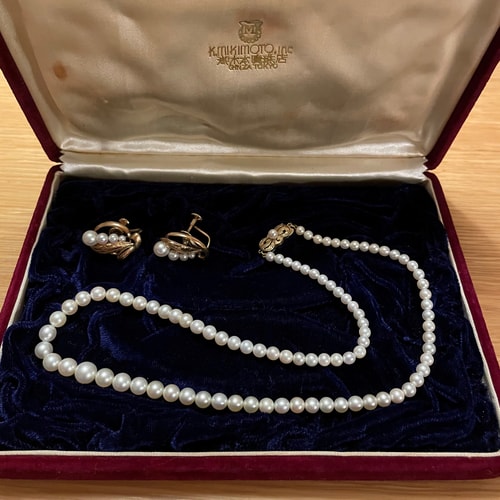
As Sanko and Kyoto University ruggers, I believe we are truly privileged to celebrate her new life from the bottom of our hearts. I have taken the liberty of choosing a Mikimoto pearl necklace as a wedding gift. Each pearl that adorns her neck represents one of us. Together, they will not only celebrate her new journey on behalf of her parents, but will also watch over her for many years to come.

Sincerely yours,

Shigeru Kayama

The letter had a huge impact. Soon funds and celebratory notes started to come in from across Japan. Kayama's wife volunteered to choose a gem for Haruko from MIKIMOTO's pearl selection. As the ample funds allowed, Kayama decided to present her with earrings and a brooch too.

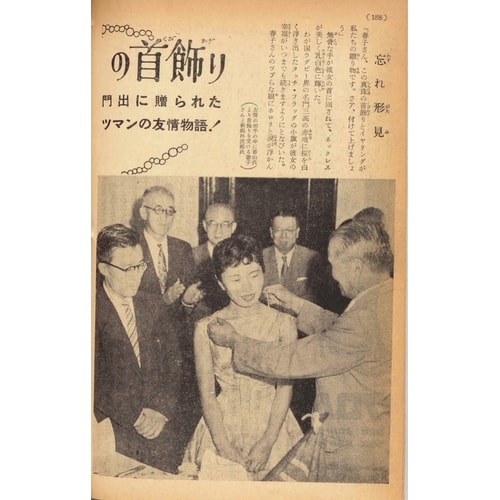
The celebration and presentation were scheduled for 21 June, 1957. Upon invitation, just one month after their wedding, the newlyweds traveled all the way from Amagasaki to Tokyo to attend the party. In response to Kayama's call, a dozen middle-aged former ruggers in classy, refined attire gathered for the celebration. The room was filled with a bright atmosphere from start to finish.

The article in "Fujin Seikatsu" concludes with the following words: "The bond of the rugby players who knew Haruko's father is woven into every single pearl of the necklace, celebrating her journey into marriage. How happy her parents would be if they were alive! Haruko's heart was filled to the brim."

The story of the tragedy has long remained forgotten in the history of Japanese rugby until Yoshiharu Hayashi, 65, son of Jiro and Haruko, discovered his mother's personal effects and donated them to Kyoto University RFC in January 2025. The necklace and earrings, brooch, and photographs of Minoru and Haruko together with newspaper clippings, are now featured on the 100th anniversary special website of the Kyoto University RFC.


Acknowledgement - I would like to express my sincere gratitude to Yoshiharu Hayashi-grandson of Minoru Mera and son of Haruko Hayashi-for providing the photographs used in this article. I am also deeply grateful to Shinya Natsuyama, focal point of the Kyoto University Rugby Football Club's 100th anniversary website, for kindly facilitating the connection with Yoshiharu Hayashi.

About the Author - Hideki Shoji is a local government official in Tsuruoka city. He is a collector of rugby memorabilia and researcher on the history of Japanese rugby. He plays wing/fullback at Harbor Blacks, a local club in Sakata city.